How the Christmas ornament came to be
The first Christmas trees weren't dressed with glass at all. Families reached for whatever the pantry and garden offered — apples and nuts, paper roses, gilded pinecones, and small lit candles clipped to the branches.
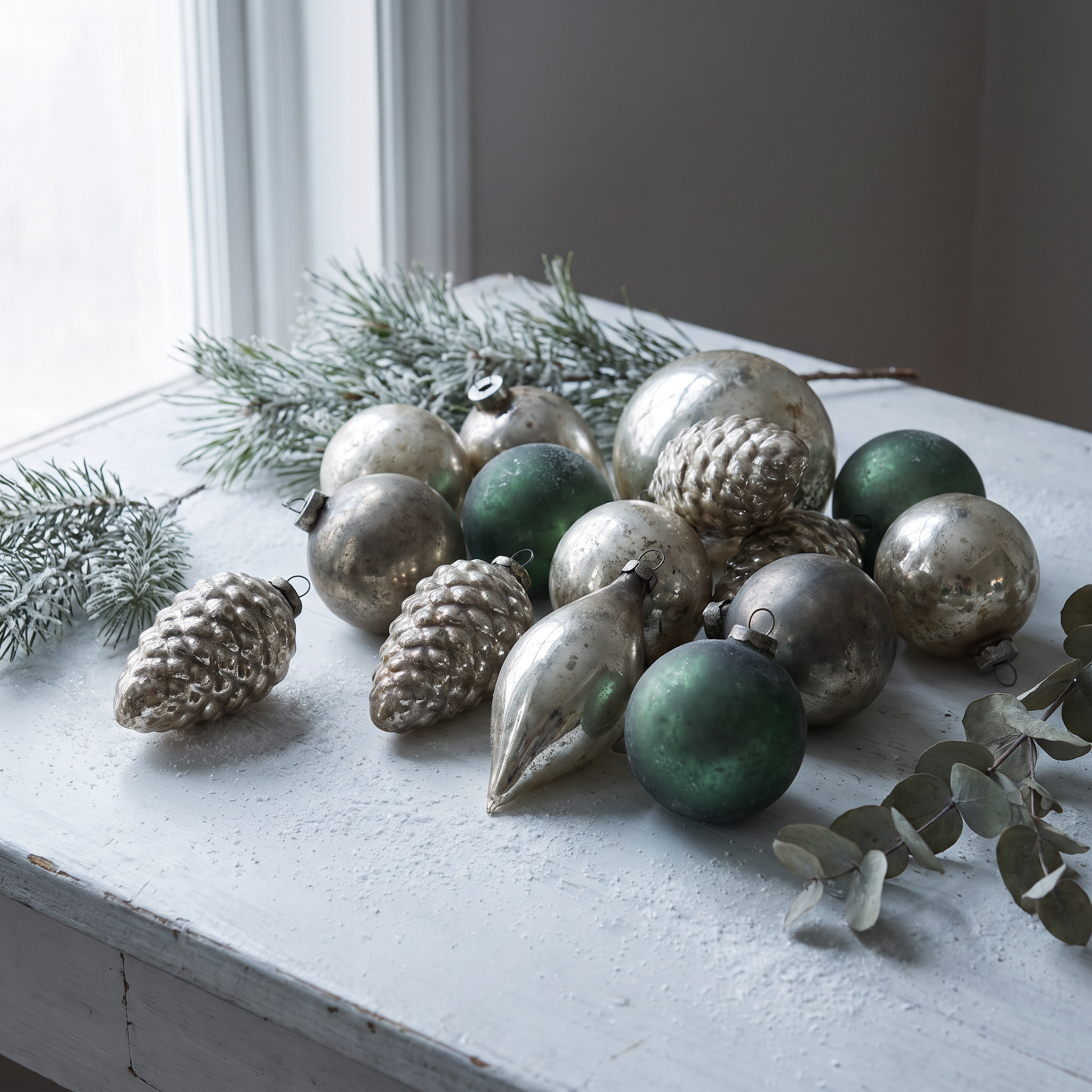
Then, in 1847, a glassblower in the German village of Lauscha shaped the first glass baubles. By the end of the century, Czech and German glass factories were turning out delicate mould-blown, silver-lined, hand-painted ornaments — and the fashion spread quickly across Europe and, soon after, America.
Tinsel, garland and the tree-topper followed. The bauble — a thin glass sphere given a mirror-bright metallic lining and a wash of colour — became the classic shape nearly everyone pictures today.
Even a small, plain ornament — handed down from a parent or grandparent — can carry more weight than anything else on the tree.
That's really why we do this. An ornament a year, chosen for a person or a passion, until the tree becomes a kind of family album you unpack every December.